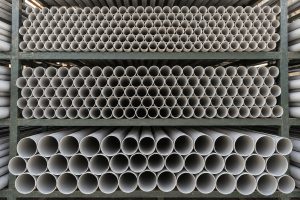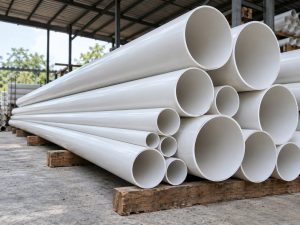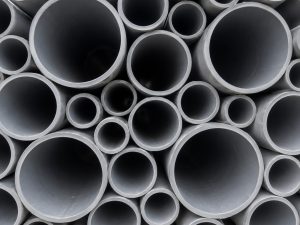
The easiest way to identify quality pipe is to use standard testing equipment in a laboratory. But what if you do not have any?
There are other ways to tell quality pipe from poor pipe, using a few simple checks.
1. Measurement
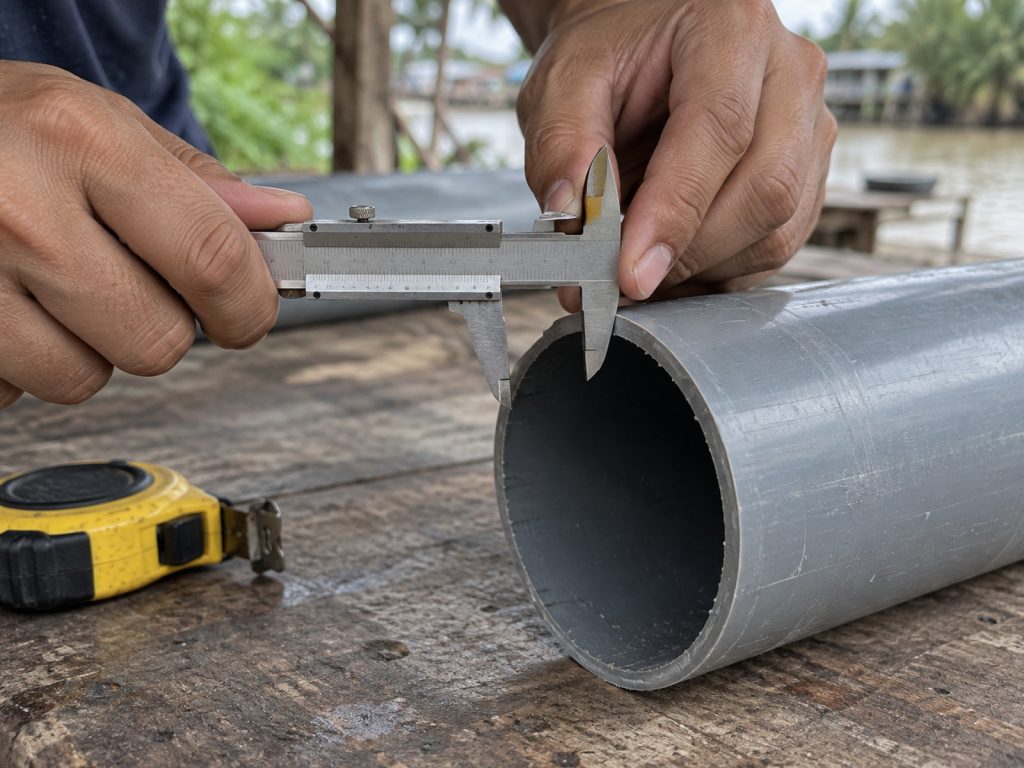
Measure the wall thickness
Check that the specified wall thickness is reached. Take the thickness by averaging several measurements around the edge of the pipe.
Measure the length
Check that the pipe is the full length stated.
2. Appearance
Look at the outer and inner surface
A glossy, oily-looking surface is usually a sign of a better quality product.
Look at the colour
Look for pipe with an even colour along its whole length. Pipe that contains a lot of other materials, including recycled material, is more yellowish in colour, so some manufacturers use a darker dye to cover it. For example, grey pipe will look darker, and white uPVC pipe will look more bluish.
3. Weight
Weigh two pipes of the same diameter, wall thickness and length. The heavier pipe may contain more calcium powder and impurities. Too much calcium and impurity additive weakens the pipe wall, and a weaker wall leaks when the pressure goes beyond the strength of the wall.
4. Forcing the pipe to change shape
Step on the side of the pipe so that it changes shape, and note how much force this takes. A quality pipe is usually not easy to flatten and will not break. Some low quality pipes do break, because they contain too much material other than PVC.
Our PVC pipe
CTM PVC pipe is made at our own factory in Sibu. See the products below, or ask us for a quotation.